If you haven’t heard the latest out of Happy Valley, Pennsylvania, authorities have charged 14 current and former Penn State students and a parent, in connection with an alleged cocaine-distribution operation tied to two fraternities, Sigma Chi and Delta Upsilon. The operation allegedly took place between 2023 and 2024. I’m not going to go into all the details, the story has been both widely reported and skewered by online satirists. Notably, the alleged ring leader has been given the moniker, “Pablo Pledgescobar”, largely due to the reports that in some cases, pledges were involved in cutting and bagging the drugs as part of their “indoctrination”.
No campus wants to be part of such a scandal. Penn State’s Division of Student Affairs has put out a pretty standard public statement about the incident, including clarification that Sigma Chi is not a recognized Penn State organization. While that distinction matters from a wonky Student Affairs administrative perspective, it does not matter or resonate when the public is wondering about campus culture and student safety.
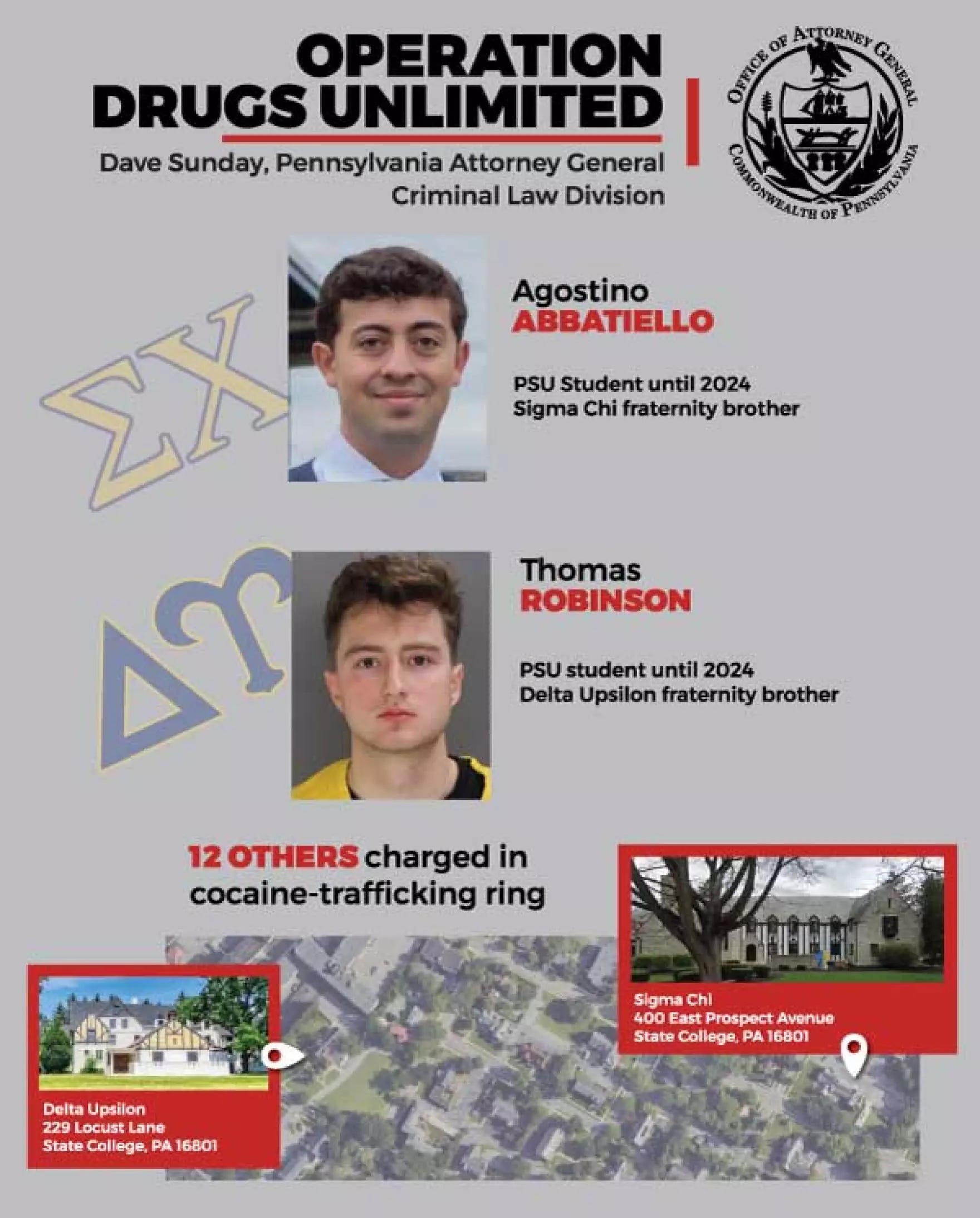
Image: PA Attorney General Office
The two fraternities at the center: Delta Upsilon who touts itself as “the world’s oldest non-secret, non-hazing fraternity” and Sigma Chi whose motto of “expect more” have made their own statements, and as such have become a case study in why crisis communication is a serious skill and should not be attempted by the unqualified.
If you are a consistent reader of “What’s Up in the Academy?” you know how much I love to tout mission and values at both the institutional and organizational level. The stated mission and values typically provide us with the spirit of the institution and should be what drives response to this crisis. In the case of Fraternity and Sorority life, mission is literally recited at retreats and recruitment activities on the regular. Mission and values are typically part of written or oral exams that determine if a student meets the litmus test to be a member of the organization. If mission and values are being used to justify why standards do not apply to the specific fraternities, then we’ve lost the plot.
Penn State’s own values commit the flagship to integrity, respect, responsibility, and community. These are standards intended to guide the actions and accountability of everyone who claims to be a Nittany Lion, and should be used with intention through the institutions response.
The two fraternity’s have different public statements, but with a similar “we are disappointed” tone. Please note: “we are disappointed” is not a crisis response strategy, and neither is pointing a finger toward bad actors, rather than turning a mirror on the organization’s structures, practices and leadership culture. Rather, a serious response requires a credible accounting of what leaders knew, what safeguards failed, who had authority, and what will change.
Since the hazing death of Timothy Piazza in 2017, Penn State has been attempting to reign in their fraternity and sorority life program. But in 2023, the same time that this alleged incident occurred, reporting indicates that alumni influence on the new administration rolled back any real structural changes that may have influenced culture. Penn State’s recent history with their Fraternity Sorority Life system elevates this moment to more than a click-bait scandal of the moment. It is a test of whether the university has the appetite to make its stated mission and values, the standard for meaningful culture change.